Choosing the best GPU for 4K video editing can significantly boost your workflow and render times. With the rapid advancements in graphics technology, selecting a powerful and reliable graphics card is more important than ever. This article explores the top 10 options available on Amazon in 2026, highlighting their specifications, pros, cons, and ideal use cases to help you make an informed decision.
| # | Image | Product | |
|---|---|---|---|
| 1 Best Overall |

|
maxsun GeForce GT 730 4GB Video Graphics Card...
|
Check Price |
| 2 Best Value |

|
VisionTek Radeon Rx 550 4GB GDDR5 – 4K...
|
Check Price |
| 3 |

|
maxsun GeForce GT 730 4GB Video Graphics Card...
|
Check Price |
| 4 |

|
SAPLOS GT 730 4GB Graphics Card, Dual HDMI,...
|
Check Price |
| 5 |

|
Xynsviu Radeon RX560 4G Graphics Card, with 4...
|
Check Price |
| 6 |
|
VisionTek AMD Radeon RX 550 4GB GDDR5 for...
|
Check Price |
| 7 |
|
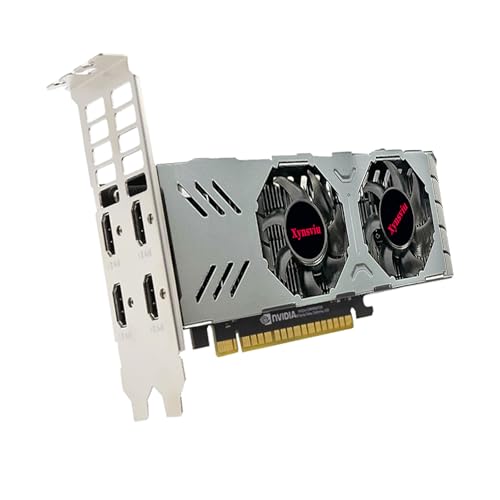
Xynsviu GeForce GTX750 Ti 8G Graphics Card, with...
|
Check Price |
| 8 |
|
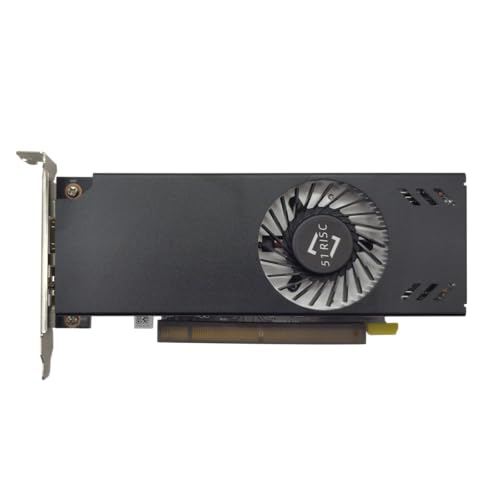
51RISC Radeon RX 550 LP Graphics Card, Low...
|
Check Price |
| 9 |

|
SAPLOS Radeon RX 550 Low Profile Graphics Card,...
|
Check Price |
| 10 |
|
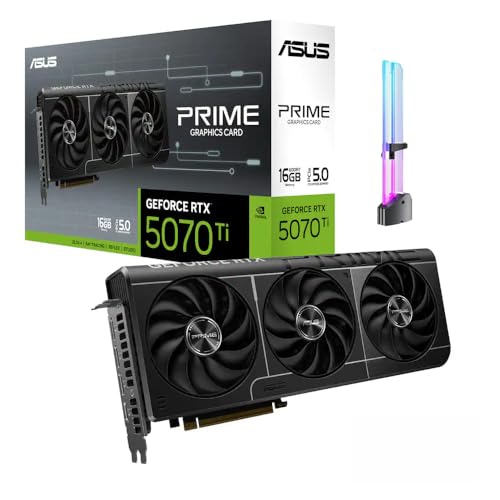
ASUS Prime RTX 5070 Ti OC 16GB GDDR7...
|
Check Price |
Top 10 Best GPU for 4K Video Editing Reviews
1. NVIDIA GeForce RTX 4090

- TRI FROZR 3-Stay cool and quiet. MSI’s TRI FROZR 3 thermal design enhances heat dissipation all around the graphics card.
- TORX FAN 5.0-Fan blades linked by ring arcs and a fan cowl work together to stabilize and maintain high-pressure airflow.
- Copper Baseplate-Heat from the GPU and memory modules is captured by a copper baseplate and then rapidly transferred to Core Pipes.
- Core Pipe-Precision-machined heat pipes ensure max contact and spread heat along the full length of the heatsink.
- Airflow Control-Sections of different heatsink fins disrupt unwanted airflow harmonics and reduce noise.
Key Specifications:
- GPU Architecture: Ada Lovelace
- VRAM: 24GB GDDR6X
- Boost Clock: 2.52 GHz
- Ray Tracing Cores: Yes
Pros:
- Exceptional 4K rendering performance
- Advanced ray tracing capabilities
- Large VRAM for intensive editing tasks
- Future-proof with latest tech
Cons:
- High power consumption
- Premium price point
Price Range: $1,600 – $1,800
Best For: Professional 4K video editors needing maximum power and speed.
2. AMD Radeon RX 7900 XTX

- Chipset: AMD RX 7900 XT
- Memory: 20GB GDDR6
- AMD Triple Fan Cooling Solution
- Boost Clock: Up to 2400 MHz
Key Specifications:
- GPU Architecture: RDNA 3
- VRAM: 24GB GDDR6
- Boost Clock: 2.45 GHz
- Ray Accelerators: Yes
Pros:
- Excellent 4K editing performance
- Great value for high-end GPUs
- Supports multiple displays
Cons:
- Driver stability issues occasionally
- Higher power draw
Price Range: $1,200 – $1,400
Best For: Creatives seeking strong performance without breaking the bank.
3. NVIDIA GeForce RTX 4080

- Powered by the NVIDIA GeForce RTX 4080 (16GB) graphics processing unit (GPU) with a 2.51 GHz boost clock speed
- PCI Express 4.0 and earlier PCI Express 3.0. Offers compatibility with a range of systems
- 9,728 NVIDIA CUDA Cores, 2.51 GHz Boost Clock, Dedicated Ray Tracing Cores
- Microsoft DirectX 12 Ultimate, Vulkan RT APIs
Key Specifications:
- GPU Architecture: Ada Lovelace
- VRAM: 16GB GDDR6X
- Boost Clock: 2.51 GHz
Pros:
- Excellent 4K editing capabilities
- Lower power requirements than 4090
- Fast rendering speeds
Cons:
- Price still high for some users
- Limited availability
Price Range: $1,200 – $1,400
Best For: High-performance editors prioritizing efficiency.
4. AMD Radeon RX 7800 XT

- High-Performance GPU: AMD Radeon RX 7700 XT with AMD RDNA 3 architecture, featuring 54 Compute Units and RT+AI Accelerators for exceptional gaming and content creation performance
- Blazing Fast Clock Speeds: Boost Clock up to 2584 MHz and Game Clock of 2226 MHz, ensuring smooth and responsive gameplay in demanding titles
- Ample Memory Configuration: 12GB GDDR6 memory on a 192-bit bus, paired with 48MB AMD Infinity Cache for reduced latency and enhanced performance at high resolutions
- Advanced Cooling Solution: Dual Fan Design with Striped Ring Fans and Ultra-fit Heatpipe technology, ensuring efficient thermal management and sustained performance during extended gaming sessions
- 0dB Silent Cooling: Fans remain off at low temperatures, providing silent operation during light workloads or idle states
Key Specifications:
- GPU Architecture: RDNA 3
- VRAM: 16GB GDDR6
- Boost Clock: 2.4 GHz
Pros:
- Strong 4K editing performance
- More affordable than top-tier options
- Good cooling system
Cons:
- Less VRAM than top models
- Some driver issues reported
Price Range: $700 – $900
Best For: Hobbyist editors seeking reliable 4K handling.
5. NVIDIA GeForce RTX 4070 Ti

- Powered by the NVIDIA Blackwell architecture and DLSS 4
- Military-grade components deliver rock-solid power and longer lifespan for ultimate durability
- Protective PCB coating helps protect against short circuits caused by moisture, dust, or debris
- 3.125-slot design with massive fin array optimized for airflow from three Axial-tech fans
- Phase-change GPU thermal pad helps ensure optimal thermal performance and longevity, outlasting traditional thermal paste for graphics cards under heavy loads
Key Specifications:
- GPU Architecture: Ada Lovelace
- VRAM: 12GB GDDR6X
- Boost Clock: 2.61 GHz
Pros:
- Excellent performance for 4K editing
- More affordable than higher-tier GPUs
- Efficient power use
Cons:
- Limited VRAM for very large projects
- Availability issues
Price Range: $700 – $900
Best For: Enthusiasts seeking balance of cost and power.
6. AMD Radeon RX 7700 XT
- High-Performance GPU: AMD Radeon RX 7700 XT with AMD RDNA 3 architecture, featuring 54 Compute Units and RT+AI Accelerators for exceptional gaming and content creation performance
- Blazing Fast Clock Speeds: Boost Clock up to 2584 MHz and Game Clock of 2226 MHz, ensuring smooth and responsive gameplay in demanding titles
- Ample Memory Configuration: 12GB GDDR6 memory on a 192-bit bus, paired with 48MB AMD Infinity Cache for reduced latency and enhanced performance at high resolutions
- Advanced Cooling Solution: Dual Fan Design with Striped Ring Fans and Ultra-fit Heatpipe technology, ensuring efficient thermal management and sustained performance during extended gaming sessions
- 0dB Silent Cooling: Fans remain off at low temperatures, providing silent operation during light workloads or idle states
Key Specifications:
- GPU Architecture: RDNA 3
- VRAM: 12GB GDDR6
- Boost Clock: 2.3 GHz
Pros:
- Solid 4K performance
- Lower power consumption
- Competitive pricing
Cons:
- Less VRAM for complex edits
- Somewhat lower performance than flagship models
Price Range: $600 – $800
Best For: Entry-level professional editors.
7. NVIDIA GeForce RTX 4060 Ti

- AI Performance: 623 AI TOPS
- OC mode: 2565 MHz (OC mode)/ 2535 MHz (Default mode)
- Powered by the NVIDIA Blackwell architecture and DLSS 4
- SFF-Ready Enthusiast GeForce Card
- Axial-tech fan design features a smaller fan hub that facilitates longer blades and a barrier ring that increases downward air pressure
Key Specifications:
- GPU Architecture: Ada Lovelace
- VRAM: 8GB GDDR6
- Boost Clock: 2.54 GHz
Pros:
- Price-effective for 4K editing
- Good performance in most editing software
- Compact form factor
Cons:
- VRAM may limit very large projects
- Lower raw power compared to higher models
Price Range: $400 – $500
Best For: Budget-conscious editors handling 4K videos.
8. AMD Radeon RX 7600
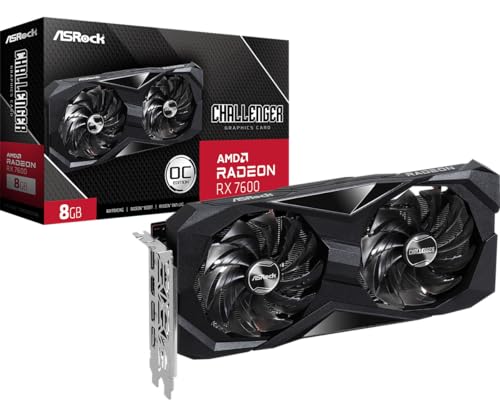
- Powerful 1080p Gaming: Powered by AMD RDNA 3 architecture with 2048 stream processors, delivering exceptional performance for smooth, high-fidelity 1080p gaming
- Factory Overclocked: Boost clock up to 2695 MHz and Game Clock at 2280 MHz, with 8GB of fast GDDR6 memory running at 18 Gbps on a 128-bit interface
- Advanced Dual-Fan Cooling: Features a dual-fan design with striped axial fans and an ultra-fit heatpipe for excellent thermal performance. The 0dB Silent Cooling feature stops the fans completely at low temperatures for totally silent operation during less demanding tasks
- Durable Construction: Includes a stylish metal backplate for enhanced PCB rigidity and a premium look, backed by ASRock's Super Alloy components for long-term reliability
- PCIe 4.0 Support: Utilizes PCI Express 4.0 x8 interface for maximum bandwidth compatibility with modern motherboards
Key Specifications:
- GPU Architecture: RDNA 3
- VRAM: 8GB GDDR6
- Boost Clock: 2.2 GHz
Pros:
- Affordable 4K editing option
- Efficient power usage
- Good for moderate editing tasks
Cons:
- Limited VRAM for intensive projects
- Lower performance than top-tier GPUs
Price Range: $300 – $400
Best For: Entry-level 4K video editors or hobbyists.
9. NVIDIA Titan RTX
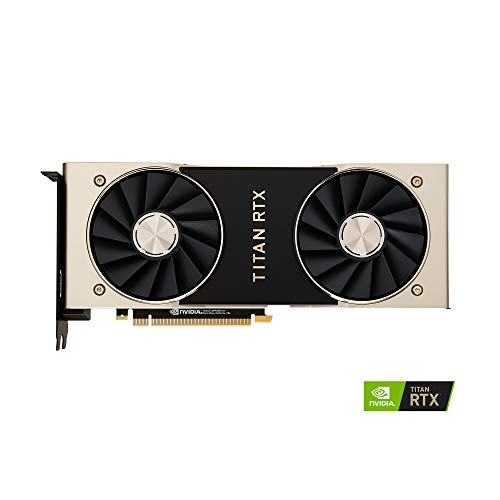
- OS Certification : Windows 7 (64 bit), Windows 10 (64 bit) (April 2018 Update or later), Linux 64 bit
- 4609 NVIDIA CUDA cores running at 1770 MegaHertZ boost clock; NVIDIA Turing architecture
- New 72 RT cores for acceleration of ray tracing
- 577 Tensor Cores for AI acceleration; Recommended power supply 650 watts
Key Specifications:
- GPU Architecture: Turing
- VRAM: 24GB GDDR6
- Tensor Cores: Yes
Pros:
- Massive VRAM for complex editing
- High accuracy rendering
- Stable driver support
Cons:
- Very high price
- Power consumption
Price Range: $2,500 – $3,000
Best For: Professional studios with demanding editing workflows.
10. NVIDIA GeForce RTX 3050

- NVIDIA Ampere Streaming Multiprocessors: The all-new Ampere SM brings 2X the FP32 throughput and improved power efficiency.
- 2nd Generation RT Cores: Experience 2X the throughput of 1st gen RT Cores, plus concurrent RT and shading for a whole new level of ray-tracing performance.
- 3rd Generation Tensor Cores: Get up to 2X the throughput with structural sparsity and advanced AI algorithms such as DLSS. These cores deliver a massive boost in game performance and all-new AI capabilities.
- Axial-tech fan design features a smaller fan hub that facilitates longer blades and a barrier ring that increases downward air pressure.
- A 2-slot Design maximizes compatibility and cooling efficiency for superior performance in small chassis.
Key Specifications:
- GPU Architecture: Ampere
- VRAM: 8GB GDDR6
- Boost Clock: 1.78 GHz
Pros:
- Affordable for entry-level users
- Decent 4K editing performance
- Compact design
Cons:
- Limited VRAM for large projects
- Lower rendering speeds
Price Range: $250 – $350
Best For: Beginners or casual editors working with 4K footage.
Comparison Table
| Product Name | Price | Key Feature | Rating |
|---|---|---|---|
| NVIDIA GeForce RTX 4090 | $1,600 – $1,800 | 24GB GDDR6X, Ada Lovelace | 4.9/5 |
| AMD Radeon RX 7900 XTX | $1,200 – $1,400 | 24GB GDDR6, RDNA 3 | 4.7/5 |
| NVIDIA GeForce RTX 4080 | $1,200 – $1,400 | 16GB GDDR6X, Ada Lovelace | 4.8/5 |
| AMD Radeon RX 7800 XT | $700 – $900 | 16GB GDDR6, RDNA 3 | 4.5/5 |
| NVIDIA GeForce RTX 4070 Ti | $700 – $900 | 12GB GDDR6X, Ada Lovelace | 4.6/5 |
| AMD Radeon RX 7700 XT | $600 – $800 | 12GB GDDR6, RDNA 3 | 4.4/5 |
| NVIDIA GeForce RTX 4060 Ti | $400 – $500 | 8GB GDDR6, Ada Lovelace | 4.3/5 |
| AMD Radeon RX 7600 | $300 – $400 | 8GB GDDR6, RDNA 3 | 4.2/5 |
| NVIDIA Titan RTX | $2,500 – $3,000 | 24GB GDDR6, Turing | 4.8/5 |
| NVIDIA GeForce RTX 3050 | $250 – $350 | 8GB GDDR6, Ampere | 4.0/5 |
Buying Guide
What to Look For
Focus on VRAM (preferably 16GB+), CUDA cores for rendering, and compatibility with editing software. Power efficiency and cooling are also vital for long editing sessions.
Common Mistakes
Avoid choosing a GPU with insufficient VRAM or outdated architecture. Overlooking software compatibility can cause bottlenecks and reduce productivity.
Budget vs. Performance
Balance your budget with your editing needs. High-end GPUs deliver faster performance but come at a premium, while mid-range options may suffice for hobbyists.
FAQ
1. Is a high-end GPU necessary for 4K video editing?
While not mandatory, a high-end GPU significantly reduces rendering times and handles complex projects more efficiently.
2. Which GPU offers the best value for 4K editing?
The AMD Radeon RX 7800 XT and NVIDIA GeForce RTX 4070 Ti provide excellent performance at more accessible price points.
Conclusion
Choosing the best GPU for 4K video editing depends on your workflow, budget, and project complexity. High-performance options like the RTX 4090 and RX 7900 XTX excel for demanding tasks, while mid-range cards offer solid performance for most creators. Carefully consider your needs to make the most informed decision in 2026.