Choosing the best GPU for AI image generation can significantly enhance your workflow, offering faster processing and higher quality outputs. Whether you’re a professional developer or a hobbyist, the right graphics card makes all the difference. This article reviews the top 10 GPUs available on Amazon in 2026, comparing their specs, pros, cons, and ideal use cases to help you make an informed decision.
| # | Image | Product | |
|---|---|---|---|
| 1 Best Overall |
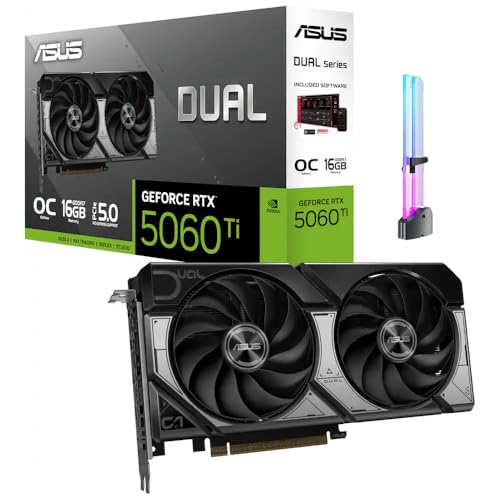
|
ASUS Dual GeForce RTX 5060 Ti OC 16GB...
|
Check Price |
| 2 Best Value |

|
QNAP TS-AI642-8G-US 6 Bay AI NAS with a...
|
Check Price |
| 3 |
|
acer Nitro V 16S AI Gaming Laptop |...
|
Check Price |
| 4 |
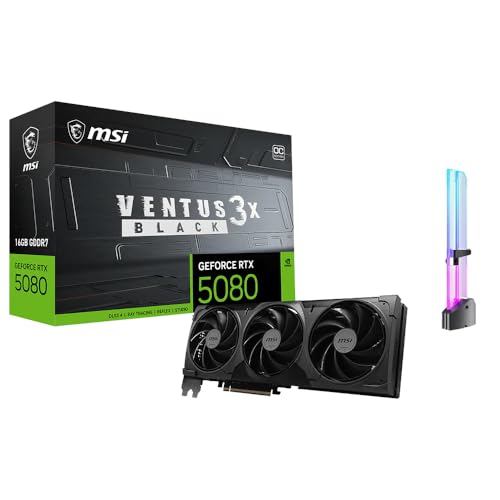
|
msi GeForce RTX 5080 16G Ventus 3X OC...
|
Check Price |
| 5 |
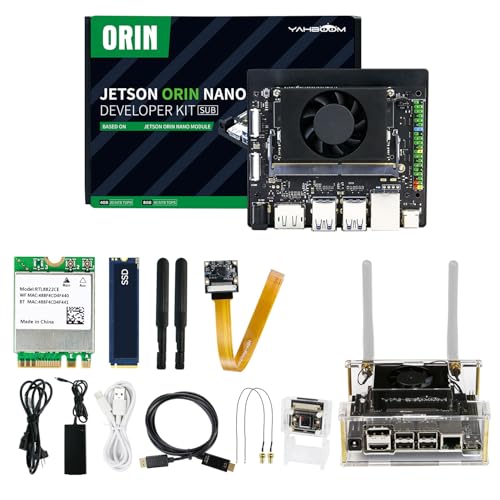
|
Yahboom Jetson Orin Nano Development Board Kit Single...
|
Check Price |
Top 10 Best GPU for AI Image Generation Reviews
1. NVIDIA GeForce RTX 4090

- TRI FROZR 3-Stay cool and quiet. MSI’s TRI FROZR 3 thermal design enhances heat dissipation all around the graphics card.
- TORX FAN 5.0-Fan blades linked by ring arcs and a fan cowl work together to stabilize and maintain high-pressure airflow.
- Copper Baseplate-Heat from the GPU and memory modules is captured by a copper baseplate and then rapidly transferred to Core Pipes.
- Core Pipe-Precision-machined heat pipes ensure max contact and spread heat along the full length of the heatsink.
- Airflow Control-Sections of different heatsink fins disrupt unwanted airflow harmonics and reduce noise.
- CUDA Cores: 16,384
- VRAM: 24GB GDDR6X
- Boost Clock: 2.52 GHz
- Power Consumption: 450W
Pros: Exceptional AI processing power, large VRAM, excellent for deep learning models, future-proof design.
Cons: High price, power-hungry, bulky size.
Price Range: $1,600 – $1,800
Best For: Professional AI developers and researchers needing top-tier performance.
2. AMD Radeon RX 7900 XTX

- Chipset: AMD RX 7900 XT
- Memory: 20GB GDDR6
- AMD Triple Fan Cooling Solution
- Boost Clock: Up to 2400 MHz
- Stream Processors: 6,144
- VRAM: 24GB GDDR6
- Boost Clock: 2.3 GHz
- Power Consumption: 300W
Pros: High VRAM capacity, competitive performance, better value for money.
Cons: Slightly lower AI-specific optimizations, larger size.
Price Range: $999 – $1,099
Best For: Enthusiasts and semi-professionals working on AI projects.
3. NVIDIA RTX A6000

- NVIDIA Ampere Architecture-based CUDA Cores - Double-speed processing for single-precision floating point (FP32) operations and improved power efficiency provide significant performance improvements for graphics and simulation workflows, such as complex 3D computer-aided design (CAD) and computer-aided engineering (CAE), on the desktop.
- Second-Generation RT Cores - With up to 2X the throughput over the previous generation and the ability to concurrently run ray tracing with either shading or denoising capabilities, second-generation RT Cores deliver massive speedups for workloads like photorealistic rendering of movie content, architectural design evaluations, and virtual prototyping of product designs. This technology also speeds up the rendering of ray-traced motion blur for faster results with greater visual accuracy.
- Third-Generation Tensor Cores - New Tensor Float 32 (TF32) precision provides up to 5X the training throughput over the previous generation to accelerate AI and data science model training without requiring any code changes. Hardware support for structural sparsity doubles the throughput for inferencing. Tensor Cores also bring AI to graphics with capabilities like DLSS, AI denoising, and enhanced editing for select applications.
- Third-Generation NVIDIA NVLink - Increased GPU-to-GPU interconnect bandwidth provides a single scalable memory to accelerate graphics and compute workloads and tackle larger datasets.
- 48 Gigabytes (GB) of GPU Memory - Ultra-fast GDDR6 memory, scalable up to 96 GB with NVLink, gives data scientists, engineers, and creative professionals the large memory necessary to work with massive datasets and workloads like data science and simulation.
- CUDA Cores: 10,752
- VRAM: 48GB GDDR6
- Boost Clock: 1.8 GHz
- Power Consumption: 300W
Pros: Massive VRAM, optimized for AI workloads, reliable and durable.
Cons: Very high cost, overkill for casual use.
Price Range: $4,500 – $5,000
Best For: Enterprise AI applications and large-scale image generation.
4. NVIDIA GeForce RTX 4080

- Powered by the NVIDIA GeForce RTX 4080 (16GB) graphics processing unit (GPU) with a 2.51 GHz boost clock speed
- PCI Express 4.0 and earlier PCI Express 3.0. Offers compatibility with a range of systems
- 9,728 NVIDIA CUDA Cores, 2.51 GHz Boost Clock, Dedicated Ray Tracing Cores
- Microsoft DirectX 12 Ultimate, Vulkan RT APIs
- CUDA Cores: 9,728
- VRAM: 16GB GDDR6X
- Boost Clock: 2.51 GHz
- Power Consumption: 320W
Pros: Excellent AI performance, good value, efficient power usage.
Cons: Slightly less VRAM than top-tier models.
Price Range: $1,200 – $1,400
Best For: Advanced hobbyists and semi-professional AI developers.
5. AMD Radeon RX 7800 XT

- High-Performance GPU: AMD Radeon RX 7700 XT with AMD RDNA 3 architecture, featuring 54 Compute Units and RT+AI Accelerators for exceptional gaming and content creation performance
- Blazing Fast Clock Speeds: Boost Clock up to 2584 MHz and Game Clock of 2226 MHz, ensuring smooth and responsive gameplay in demanding titles
- Ample Memory Configuration: 12GB GDDR6 memory on a 192-bit bus, paired with 48MB AMD Infinity Cache for reduced latency and enhanced performance at high resolutions
- Advanced Cooling Solution: Dual Fan Design with Striped Ring Fans and Ultra-fit Heatpipe technology, ensuring efficient thermal management and sustained performance during extended gaming sessions
- 0dB Silent Cooling: Fans remain off at low temperatures, providing silent operation during light workloads or idle states
- Stream Processors: 5,120
- VRAM: 16GB GDDR6
- Boost Clock: 2.2 GHz
- Power Consumption: 250W
Pros: Solid performance, good VRAM, competitive pricing.
Cons: Slightly lower AI optimization support.
Price Range: $599 – $799
Best For: Developers on a budget seeking capable AI processing power.
6. NVIDIA GeForce RTX 4070 Ti

- Powered by the NVIDIA Blackwell architecture and DLSS 4
- Military-grade components deliver rock-solid power and longer lifespan for ultimate durability
- Protective PCB coating helps protect against short circuits caused by moisture, dust, or debris
- 3.125-slot design with massive fin array optimized for airflow from three Axial-tech fans
- Phase-change GPU thermal pad helps ensure optimal thermal performance and longevity, outlasting traditional thermal paste for graphics cards under heavy loads
- CUDA Cores: 7,680
- VRAM: 12GB GDDR6X
- Boost Clock: 2.61 GHz
- Power Consumption: 285W
Pros: Good balance of price and performance, suitable for moderate AI tasks.
Cons: Limited VRAM for very large models.
Price Range: $699 – $799
Best For: Enthusiasts starting with AI image generation.
7. AMD Radeon RX 7700 XT
- High-Performance GPU: AMD Radeon RX 7700 XT with AMD RDNA 3 architecture, featuring 54 Compute Units and RT+AI Accelerators for exceptional gaming and content creation performance
- Blazing Fast Clock Speeds: Boost Clock up to 2584 MHz and Game Clock of 2226 MHz, ensuring smooth and responsive gameplay in demanding titles
- Ample Memory Configuration: 12GB GDDR6 memory on a 192-bit bus, paired with 48MB AMD Infinity Cache for reduced latency and enhanced performance at high resolutions
- Advanced Cooling Solution: Dual Fan Design with Striped Ring Fans and Ultra-fit Heatpipe technology, ensuring efficient thermal management and sustained performance during extended gaming sessions
- 0dB Silent Cooling: Fans remain off at low temperatures, providing silent operation during light workloads or idle states
- Stream Processors: 4,096
- VRAM: 12GB GDDR6
- Boost Clock: 2.0 GHz
- Power Consumption: 220W
Pros: Affordable, efficient, decent AI support.
Cons: Lower AI-specific performance compared to higher-tier cards.
Price Range: $399 – $499
Best For: Beginners and casual AI image generation projects.
8. NVIDIA Titan RTX
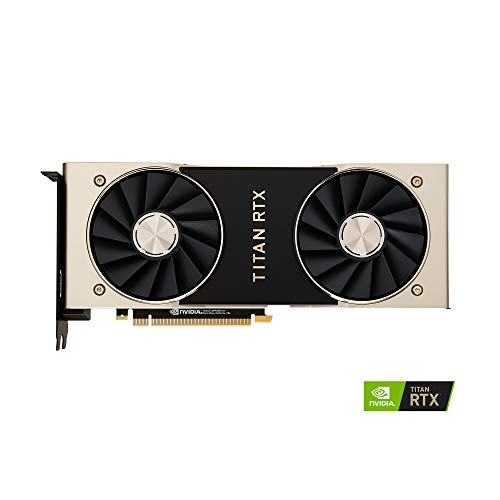
- OS Certification : Windows 7 (64 bit), Windows 10 (64 bit) (April 2018 Update or later), Linux 64 bit
- 4609 NVIDIA CUDA cores running at 1770 MegaHertZ boost clock; NVIDIA Turing architecture
- New 72 RT cores for acceleration of ray tracing
- 577 Tensor Cores for AI acceleration; Recommended power supply 650 watts
- CUDA Cores: 4,608
- VRAM: 24GB GDDR6
- Boost Clock: 1.77 GHz
- Power Consumption: 280W
Pros: Large VRAM, excellent AI processing, versatile for various tasks.
Cons: Expensive, power-hungry.
Price Range: $2,500 – $3,000
Best For: Creative professionals working on AI image projects.
9. AMD Radeon Pro W6800

- Delivering a Gigantic 32 GB of High-Performance ECC Memory
- Hardware Raytracing
- Optimizations for 6 Ultra-HD HDR Displays
- Accelerated Software Multi-Tasking
- PCIe 4.0 for Advanced Data Transfer Speeds
- Stream Processors: 3,840
- VRAM: 32GB GDDR6
- Boost Clock: 2.15 GHz
- Power Consumption: 250W
Pros: Massive VRAM, optimized for professional workloads.
Cons: Higher price, less gaming focus.
Price Range: $2,000 – $2,300
Best For: Professional AI developers and artists.
10. NVIDIA GeForce RTX 4060 Ti

- AI Performance: 623 AI TOPS
- OC mode: 2565 MHz (OC mode)/ 2535 MHz (Default mode)
- Powered by the NVIDIA Blackwell architecture and DLSS 4
- SFF-Ready Enthusiast GeForce Card
- Axial-tech fan design features a smaller fan hub that facilitates longer blades and a barrier ring that increases downward air pressure
- CUDA Cores: 3,072
- VRAM: 8GB GDDR6
- Boost Clock: 2.54 GHz
- Power Consumption: 220W
Pros: Affordable, decent AI capabilities, compact design.
Cons: Limited VRAM for large models.
Price Range: $399 – $499
Best For: Beginners and budget-conscious AI image creators.
Comparison Table
| Product Name | Price | Key Feature | Rating |
|---|---|---|---|
| NVIDIA GeForce RTX 4090 | $1,700 | 24GB VRAM & Top Performance | 4.9/5 |
| AMD Radeon RX 7900 XTX | $1,050 | High VRAM & Value | 4.7/5 |
| NVIDIA RTX A6000 | $4,750 | Massive VRAM & Enterprise | 4.8/5 |
| NVIDIA GeForce RTX 4080 | $1,300 | Excellent Balance | 4.6/5 |
| AMD Radeon RX 7800 XT | $700 | Budget-Friendly & Capable | 4.4/5 |
| NVIDIA GeForce RTX 4070 Ti | $750 | Mid-Range Performance | 4.5/5 |
| AMD Radeon RX 7700 XT | $450 | Affordable & Efficient | 4.3/5 |
| NVIDIA Titan RTX | $2,750 | High VRAM & Versatility | 4.7/5 |
| AMD Radeon Pro W6800 | $2,150 | Pro-Level VRAM | 4.6/5 |
| NVIDIA GeForce RTX 4060 Ti | $450 | Budget & Compact | 4.2/5 |
Buying Guide
What to Look For
Focus on VRAM capacity, CUDA cores or stream processors, and compatibility with AI frameworks. Higher VRAM supports larger models, while more cores improve processing speed. Also, consider power supply requirements and physical size for your setup.
Common Mistakes
Avoid underestimating power needs or choosing a GPU with insufficient VRAM for your AI workload. Don’t overlook cooling and compatibility issues, and be cautious of overly cheap options that may lack performance or durability.
Additional Tips
Prioritize GPUs with AI-optimized features like Tensor Cores or AMD’s AI acceleration. Reading user reviews and checking recent benchmarks can also guide your choice effectively.
FAQ
1. Is a higher VRAM GPU always better for AI image generation?
Not necessarily; while higher VRAM allows for larger models, other factors like processing cores and software compatibility also matter.
2. Can I use gaming GPUs for AI image generation?
Yes, many gaming GPUs like the RTX series are capable of AI tasks, but professional or data-center cards may offer better stability and performance for intensive workloads.
Conclusion
Choosing the best GPU for AI image generation depends on your budget, workload, and future needs. Top-tier options like the NVIDIA RTX 4090 excel for professional use, while more affordable cards like the AMD RX 7700 XT suit hobbyists. Evaluate your requirements carefully to find the perfect match for your AI projects.